
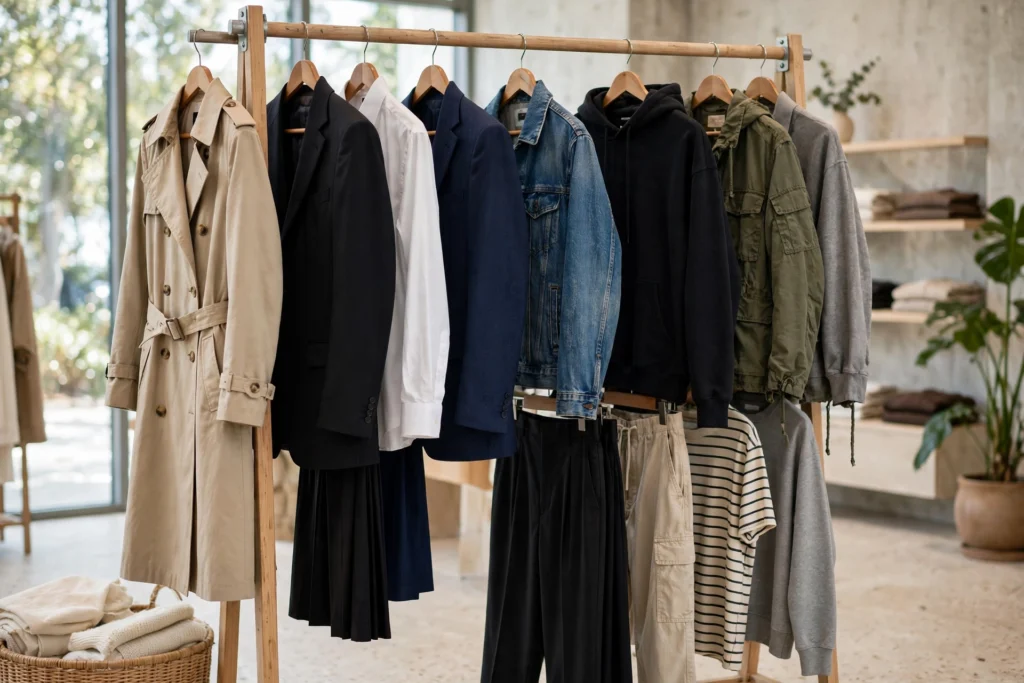
Clothing styles are the broad families of outfits people wear every day, from relaxed jeans and T-shirts to sharp suits and flowing bohemian dresses. Your clothing style is not about following every new trend or spending a lot of money. It is about choosing clothes that fit your life, feel comfortable, and help you look like yourself. This guide explains the major style families in plain terms, shows you how to find the one that suits you, and helps you build a wardrobe that works on any budget.
What Does Clothing Style Mean?
Clothing style is the overall look created by the clothes, colours, and shapes you choose again and again. Fashion is best defined simply as the style or styles of clothing and accessories worn by groups of people at any given time, and your personal style is your own version of that idea. It is shaped by your daily routine, your body shape, your climate, your culture, and your taste.
It helps to know the difference between style and trends. A trend is a look that becomes popular for a short time and then fades. A style is a longer-lasting way of dressing that you can return to year after year. You do not need to chase trends to look good. In fact, most well-dressed people wear a fairly steady style and only add small trendy touches when they feel like it. There is no single right style. The best one is the one you feel confident and comfortable wearing.
The Major Clothing Style Families
Most outfits fall into one of seven broad families. Many people mix two or three of them. Read through each one and notice which descriptions sound most like you.
Casual Style
Casual style is relaxed, easy, and built for everyday life. Think well-fitting jeans, plain T-shirts, soft sweaters, comfortable shoes, and simple jackets. The colours are usually easy neutrals like navy, grey, white, and olive, with the odd brighter piece thrown in. Nothing is stiff or fussy, and comfort comes first. Casual style suits people whose days are mostly informal, from students and parents to anyone who works from home or spends weekends outdoors. The trick is fit: relaxed does not mean shapeless. Clothes that fit well, even when they are simple, always look better than baggy or worn-out pieces.
Classic Style
Classic style is timeless and polished. It relies on clean lines, good fabrics, and pieces that never really go out of fashion: a tailored blazer, a crisp white shirt, straight-leg trousers, a simple dress, loafers, or a neat pair of leather shoes. Colours tend to be navy, black, white, beige, and grey. Classic style suits people who want to look put-together without standing out, and it works well in offices, formal events, and everyday life alike. If you like a wardrobe where everything matches everything else, classic style is a strong base.
Streetwear
Streetwear grew out of city culture, skateboarding, hip-hop, and sportswear, and it is now one of the most popular styles in the world. It is built on graphic T-shirts, hoodies, oversized fits, trainers, caps, and bold logos or prints. The attitude is relaxed and confident, and mixing high and low pieces is part of the fun. Streetwear suits people who like comfort with personality and enjoy expressing themselves through graphics, colour, and layering. To keep it looking intentional rather than messy, balance oversized pieces with one fitted item, and keep the colour palette to a few shades.
Minimalist Style
Minimalist style is about less, but better. Outfits use a small number of pieces in neutral colours, with clean cuts and almost no patterns or logos. A typical minimalist outfit might be black trousers, a white shirt, and simple white shoes. The focus is on quality fabric, good fit, and a calm, uncluttered look. Minimalist style suits people who dislike fuss, want fast mornings, and prefer a wardrobe where every piece works with every other piece. It also makes shopping simpler, because you buy fewer, better things.
Bohemian Style
Bohemian style, often shortened to boho, is free, soft, and natural. It features flowing dresses and skirts, loose blouses, earthy colours, floral or ethnic-inspired prints, and natural fabrics like cotton and linen. Layered jewellery, sandals, and woven bags complete the look. Bohemian style suits creative, easygoing people who like comfort and colour and want their clothes to feel relaxed rather than structured. The key is balance: one or two flowing pieces per outfit, paired with something simple, keeps the look graceful instead of overwhelming.
Formal and Business Style
Formal and business style is sharp, structured, and professional. For work, that means suits, tailored trousers, button-up shirts, blouses, pencil skirts, and polished shoes. For formal occasions, it means evening dresses, tuxedos, or dark suits. The fit is precise, the fabrics are smooth, and the colours are usually dark or neutral. This style suits people who work in professional settings or attend formal events often, but anyone can borrow from it: a single blazer can make a casual outfit look instantly smarter. Good tailoring matters more than brand names here.
Sporty and Athleisure Style
Sporty style, often called athleisure, mixes athletic clothes with everyday wear. Leggings, joggers, trainers, zip-up jackets, and breathable tops are the core pieces, worn not just for exercise but for errands, travel, and casual days out. The look is comfortable, practical, and easy to move in. It suits active people and anyone who values comfort above all else. To keep athleisure looking like a style rather than gym clothes, choose clean, matching pieces in solid colours and skip anything too worn or see-through.
How to Find Your Own Style
You do not need to pick a label and stick to it forever. Finding your style is a short, practical process you can do in an afternoon.
- Look at what you already love wearing. Open your wardrobe and pull out the five outfits you reach for most. Notice what they have in common: the colours, the fit, the fabrics. That pattern is the start of your style.
- Think about your real life, not an imaginary one. Your style has to work for your job, your weather, and your daily activities. A wardrobe built around your actual routine will get worn; one built around a fantasy life will sit in the closet.
- Collect inspiration, then narrow it down. Save photos of outfits you like, then look for repeats. If the same colours, shapes, or pieces keep appearing, you have found your direction. Ignore looks you admire but would never actually wear.
- Try small changes first. Before buying a whole new wardrobe, test one or two pieces in the style you are exploring. Wear them for a full day. If you feel comfortable and like what you see in the mirror, you are on the right track.
Building a Versatile Wardrobe on Any Budget
A good wardrobe is not about owning a lot of clothes. It is about owning the right ones. Start with versatile basics that mix and match: well-fitting jeans or trousers, a few plain tops in neutral colours, one good jacket, and comfortable shoes you can walk in. Then add a few pieces that show your personality, such as a printed shirt, a colourful scarf, or a jacket in your favourite colour.
On a tight budget, buy slowly and choose quality over quantity. One well-made pair of trousers you wear weekly is better value than three cheap pairs you rarely reach for. Look for sales, thrift shops, and second-hand stores, and check the fabric and stitching before you buy. Take care of what you own: wash clothes properly, repair small damage early, and store them well. A small, well-kept wardrobe will always serve you better than a large, neglected one.
Seasonal rotation helps too. At the start of each season, put away clothes you will not wear for months and bring out the ones you will. This keeps your closet manageable and reminds you what you already own, so you buy less. Before shopping, make a short list of genuine gaps: the missing layer, the worn-out shoes, the top that would match three things you already own. Stick to that list. Impulse buys are the main reason wardrobes fill up with clothes that never get worn.
Common Style Mistakes to Avoid
- Wearing the wrong fit. Clothes that are too tight or too loose rarely look good, whatever the style. Fit is the single biggest factor in looking well-dressed.
- Buying for an occasion that never comes. If you keep buying dressy clothes for a life you do not live, your wardrobe fills up with pieces you never wear.
- Copying someone else exactly. An outfit that looks great on someone else may not suit your body, colouring, or life. Borrow ideas, but adapt them to yourself.
- Ignoring comfort. If you spend the day pulling, adjusting, or wishing you were in something else, the outfit is not working, no matter how good it looks in photos.
- Overdoing accessories. A few well-chosen accessories lift an outfit. Too many compete with each other and with the clothes themselves.
Frequently Asked Questions
Can I mix different clothing styles?
Yes, and most people do. A classic blazer over a casual T-shirt, or minimalist trousers with streetwear trainers, are everyday combinations. Mixing works best when the pieces share a colour or a level of formality, so the outfit still looks connected.
How many clothes do I actually need?
Far fewer than most people own. A small wardrobe of around twenty to thirty versatile pieces, chosen so that most items work with most others, can cover work, weekends, and evenings. What matters is that the pieces fit well and suit your life.
Does style have to cost a lot of money?
No. Style comes from fit, colour, and knowing what suits you, not from price tags. Thrift shops, sales, and careful second-hand buying can build a great wardrobe on a small budget, and taking care of your clothes keeps them looking good longer.
How often should my style change?
Your core style can stay steady for years, and that is a good thing. Small updates, such as a new colour, a different shoe shape, or a fresh jacket, are enough to keep it feeling current. Change your style when your life, taste, or needs change, not because a trend tells you to.
Finding your clothing style is really about paying attention to what you like, what fits, and what your life needs. Start with the family that feels closest to you, try a few pieces, and let your style grow from there. The best-dressed people are not the ones with the most clothes. They are the ones whose clothes look and feel like them.