
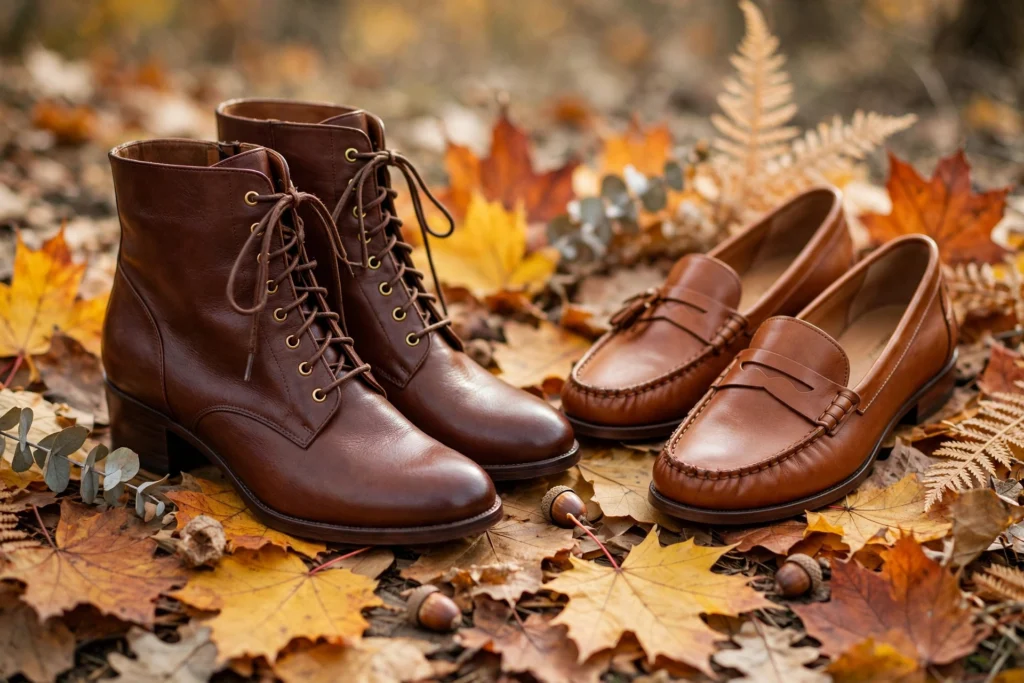
Autumn is the season when shoes matter most. Summer sandals are done, winter boots are not quite needed yet, and the weather changes daily — warm one afternoon, rainy the next. The right fall shoes for women handle all of it: comfortable enough for long days, sturdy enough for wet pavements, and stylish enough to finish an outfit.
This guide covers the essential autumn shoe styles, how to choose them, and how to make them last through the season and beyond.
The Essential Fall Shoe Styles
You do not need ten pairs of autumn shoes. Five well-chosen styles cover almost every situation the season brings.
Ankle Boots
Ankle boots are the foundation of an autumn wardrobe. They work with jeans, skirts, dresses, and trousers, and they protect your feet from puddles and cold mornings. A leather pair in black or brown is the most versatile choice. Look for a low block heel for everyday comfort, or a flat pair if you walk a lot. Chelsea boots, with their elastic sides and pull-on design, are the easiest style to wear daily.
Loafers
Loafers are the smart autumn shoe. They suit work, dinners, and days when boots feel too heavy. Leather loafers in black, tan, or burgundy pair beautifully with trousers and midi skirts. A chunky-soled loafer adds a modern edge and grips better on wet ground than a smooth sole. Wear them with ankle socks or no-show socks for a clean look.
White Trainers
Trainers are no longer just for exercise. A clean pair of leather trainers works through autumn with jeans, dresses, and even tailored trousers. White is the most versatile colour, though it needs more cleaning. For rainy days, choose a leather pair rather than canvas, since leather handles water far better.
Knee-High Boots
When the weather turns properly cold, knee-high boots come into their own. They look wonderful with midi dresses and skirts, and they add real warmth. A flat or low-heeled pair is practical for everyday wear, while a heeled pair suits evenings out. Make sure the shaft fits your calf comfortably — too tight is uncomfortable, and too loose looks sloppy.
Rain-Ready Shoes
Every autumn wardrobe needs one pair that can handle a downpour. This could be a pair of waterproof leather boots, treated suede boots, or smart wellington boots in a city-friendly style. Keep them by the door for wet days, so your good shoes stay dry.
Choosing Shoes for Autumn Weather
Autumn weather is changeable, so the material of your shoes matters as much as the style. Leather is the best all-round autumn material: it is naturally water-resistant, it breathes, and it moulds to your feet over time. Suede looks beautiful and feels soft, but it stains easily in rain, so save suede for dry days or protect it with a waterproof spray before the first wear.
Soles matter too. Rubber soles grip wet pavements far better than smooth leather soles, so check the sole before buying. A slightly chunky or lug sole is a practical autumn feature, not just a fashion detail. If you love a pair with smooth leather soles, a cobbler can add a thin rubber layer for grip at low cost.
Fit is even more important in autumn than in summer, because you will often wear thicker socks. Try shoes on with the socks you plan to wear, and walk around the shop for a few minutes. Shoes that pinch in the shop will not improve with wear — leather softens a little, but it does not change size.
Autumn Shoe Colours
Autumn has its own colour palette, and shoes are an easy way to wear it. Black is the safe, goes-with-everything choice. Brown — from tan to chocolate — adds warmth and pairs beautifully with denim, cream, and olive. Burgundy is the season’s classic accent colour: rich, flattering, and easy to match with navy, grey, and black.
Olive and navy are also useful autumn colours, especially for casual shoes. If your wardrobe is mostly neutral, one pair in burgundy or tan can lift every outfit without clashing. Avoid very bright colours in autumn footwear unless they are a deliberate accent — the season’s style is warm and muted.
Styling Fall Shoes With Your Outfits
The right shoe finishes an outfit, and autumn gives you plenty of combinations to play with. Ankle boots with skinny or straight jeans and an oversized jumper is the classic autumn outfit — easy, warm, and flattering. Loafers with tailored trousers and a knit top make a smart work outfit. Knee-high boots with a midi dress and a long coat look polished for evenings and events.
Trainers keep casual outfits grounded: pair them with a midi skirt and a denim jacket for a relaxed weekend look. And on rainy days, do not be afraid to wear your rain boots with a good outfit — a smart pair of wellingtons with a coat and scarf can look intentional rather than scruffy.
If you are building a wardrobe that works across seasons, our guide to clothing styles explained can help you see how shoes, clothes, and accessories fit together as a whole.
Comfort Tips for All-Day Wear
Autumn often means more walking: back to work, school runs, and city trips. Comfort is not optional. Cushioned insoles make a real difference, especially in flat shoes and boots — gel or foam insoles are cheap and easy to add. Break new shoes in gradually, wearing them for short periods at home before a full day out, to avoid blisters.
If you wear heels, a block heel is far kinder to your feet than a thin heel, and a heel height of five centimetres or less is manageable for most people all day. Keep a pair of foldable flat shoes in your bag for long days — your feet will thank you on the walk home.
Look after your feet as the weather cools. Moisturise regularly, since dry skin and cracked heels are common in autumn, and trim toenails straight across to avoid problems in closed shoes.
Making Your Fall Shoes Last
Good shoes are an investment, and a little care makes them last for years. Clean leather shoes with a damp cloth after wet days, and let them dry naturally away from radiators — direct heat cracks leather. Stuff boots with newspaper or boot trees to hold their shape, and store them upright rather than squashed under other shoes.
Waterproof your shoes before autumn really starts. A spray protector for leather and suede takes five minutes and prevents most rain damage. Reapply it every few weeks through the season. Finally, rotate your shoes: wearing the same pair every day wears them out faster, while alternating between two or three pairs lets each one rest and dry between wears.
Footwear has been shaped by centuries of craft, and the history of the shoe shows how styles we still wear today — boots, loafers, and heels — evolved to meet practical needs first. Autumn shoes follow the same principle: comfort and weather come first, style follows naturally.
Autumn Shoes on a Budget
Good shoes cost money, but you do not need to spend a fortune to be well-shod in autumn. The smartest approach is to spend more on the pair you wear most — usually ankle boots — and less on the rest. A well-made pair of leather ankle boots, worn several times a week for years, costs less per wear than a cheap pair replaced every season.
Timing matters. Late-summer sales are the best time to buy autumn shoes, since shops clear stock before the new season. End-of-season sales in late autumn are even cheaper, though sizes sell out fast. Outlet shops and reputable second-hand sellers are worth checking for quality brands at lower prices — leather shoes in good condition can last for years regardless of who owned them first.
When judging value, check the construction, not the brand name. Stitched soles last longer than glued ones, real leather ages better than imitation, and a replaceable heel means a cobbler can extend a shoe’s life for a small fee. A pair that can be repaired is almost always better value than a pair that cannot, however cheap it looks on the shelf.
Finally, resist buying shoes you do not need. A wardrobe of three pairs you love and wear constantly beats ten pairs that mostly sit in boxes. Buy for your real life — your commute, your weather, your walking distance — and your shoes will earn their price many times over.
Storing Shoes Between Seasons
When autumn ends, how you store your shoes decides whether they survive to next year. Clean every pair before storing: wipe leather, brush suede, and remove dirt from soles. Let them dry fully — storing damp shoes causes mould and smell that are hard to remove.
Stuff boots with newspaper or boot shapers so they hold their form, and store shoes in a cool, dry place away from direct sunlight, which fades and cracks leather. Shoe bags or boxes protect against dust and scratches, and a small sachet of baking soda inside each pair absorbs moisture and odour over the months.
Before the next autumn, take shoes out a week early, clean and condition the leather, and check soles and heels. A quick visit to a cobbler for worn heels or soles is far cheaper than replacing the pair, and it means your favourite autumn shoes are ready the moment the weather turns.
Frequently Asked Questions
How many pairs of shoes do I need for fall?
Three to five pairs cover most needs: ankle boots, loafers, trainers, and optionally knee-high boots and a rain-ready pair. Quality matters more than quantity.
Can I wear suede shoes in autumn?
Yes, but protect them first with a waterproof spray, and save them for dry days. Suede and heavy rain do not mix well, even with protection.
Are ankle boots or knee-high boots better for fall?
Ankle boots are more versatile and easier to wear daily. Knee-high boots are warmer and dressier. If you buy one pair, start with ankle boots.
What shoes are best for rainy autumn days?
Waterproof leather boots or smart wellington boots with good grip. Avoid canvas trainers and unprotected suede when rain is forecast.
The best fall shoes are the ones you reach for without thinking: comfortable, weather-ready, and matched to your life. Start with ankle boots, add loafers and trainers, and build from there. With a little care, those pairs will carry you through autumn in comfort — and still be going strong next year.